
India’s health food market is in a land grab. Health-focused foods and beverages are projected to become a $30 billion market by 2026, with the number of health-conscious consumers rising from 108 million in 2020 to an estimated 176 million. The playbook most brands follow is predictable: launch a new category, spend heavily on education, and hope consumers change their behaviour to match the product.
A quieter school of thought is emerging among Indian D2C brands, and Surat-based Alpino Health Foods has become one of its more consistent practitioners. The company’s product strategy starts from a different question altogether: not “what can we launch?” but “what are people already doing, and how can it be made simpler?”
Start With the Habit, Not the Product
The clearest example sits in the breakfast aisle.
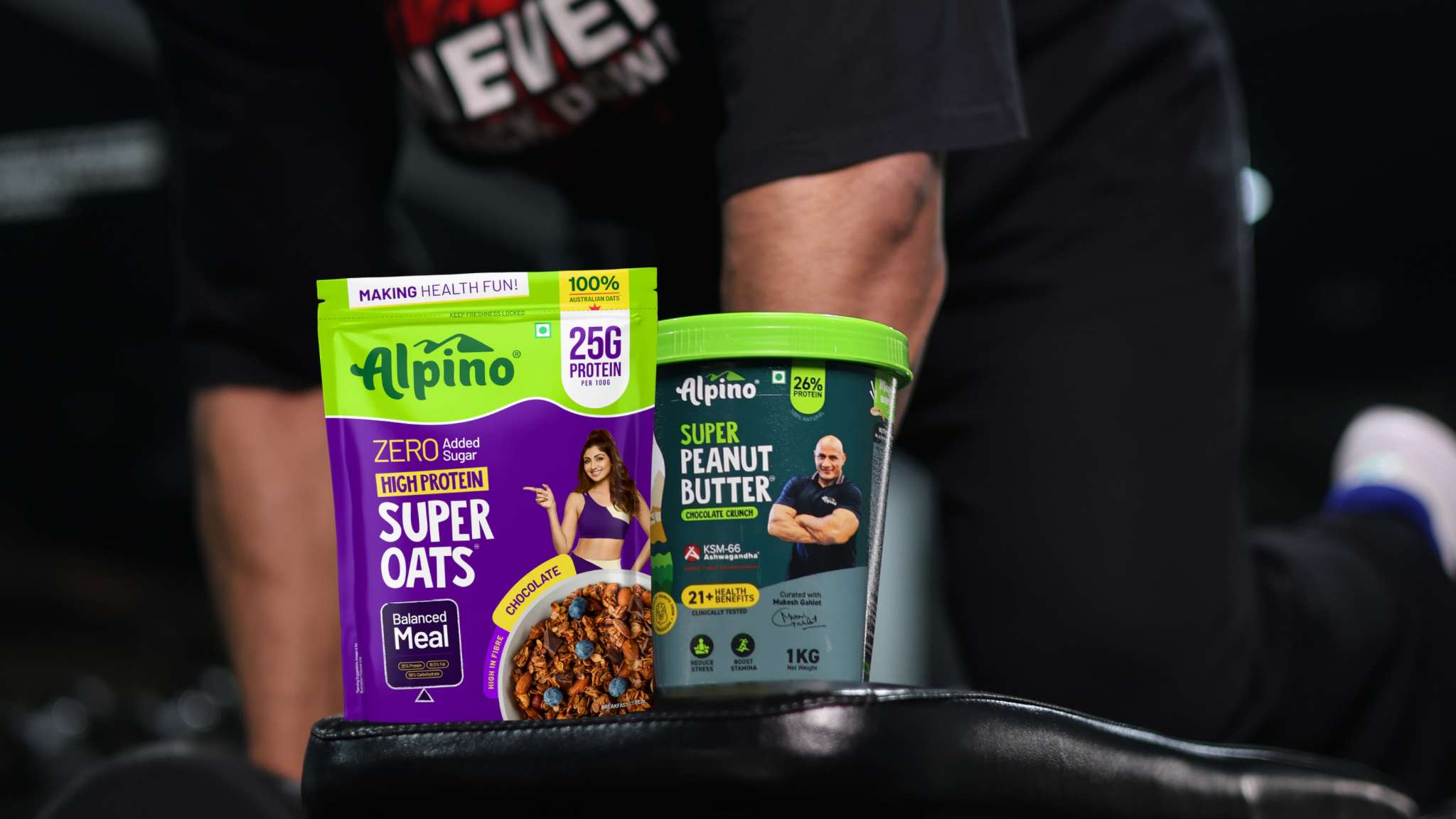
For years, fitness-conscious Indians have been mixing two products at home: oats for the base, peanut butter for protein and taste. It is a routine visible across gym communities, fitness forums, and recipe content. Alpino’s response was not another breakfast SKU competing for the same bowl. It was peanut butter-coated oats: the two-product routine collapsed into one.
Nothing about the consumer’s morning changed. Only the number of steps did.
Innovation at the Intersection of Two Routines
The company’s Ashwagandha Peanut Butter follows the same logic from a different angle.
Alpino observed that a segment of its customers were consuming peanut butter daily while separately taking ashwagandha as part of their fitness and recovery routine. Two purchases, two habits, one consumer. The brand merged them, formulating with KSM-66, among the most clinically studied ashwagandha extracts used in sports nutrition.
The notable part is not the ingredient. Functional ingredients are everywhere in Indian health food right now. The notable part is the sequencing: the consumer behaviour existed first, and the product was reverse-engineered from it.
Building Protein on a Familiar Foundation
The same philosophy explains why the company’s protein range is built on peanuts rather than imported or unfamiliar protein sources.
Peanuts already live inside Indian kitchens: in chutneys, in snacks, in chikki and traditional sweets, in everyday cooking across regions. Rather than asking Indian consumers to acquire a taste for protein formats designed elsewhere, Alpino brought protein into a flavour base the market already trusts.
It is a distinctly Indian answer to a category still dominated by Western templates.
The Larger Lesson
Industry observers note that the Indian health food segment remains underpenetrated: healthy food accounts for roughly 11% of packaged food and beverages in India, against 31% in the US. In a market with that much headroom, the temptation is to invent categories. Alpino’s approach suggests the opposite may be the faster route: the products that scale are often not the ones that change consumer habits, but the ones that fit invisibly into them.
https://medium.com/@sahildua_sd.xo/how-big-is-the-healthy-food-market-in-india-c227d95135c3
